
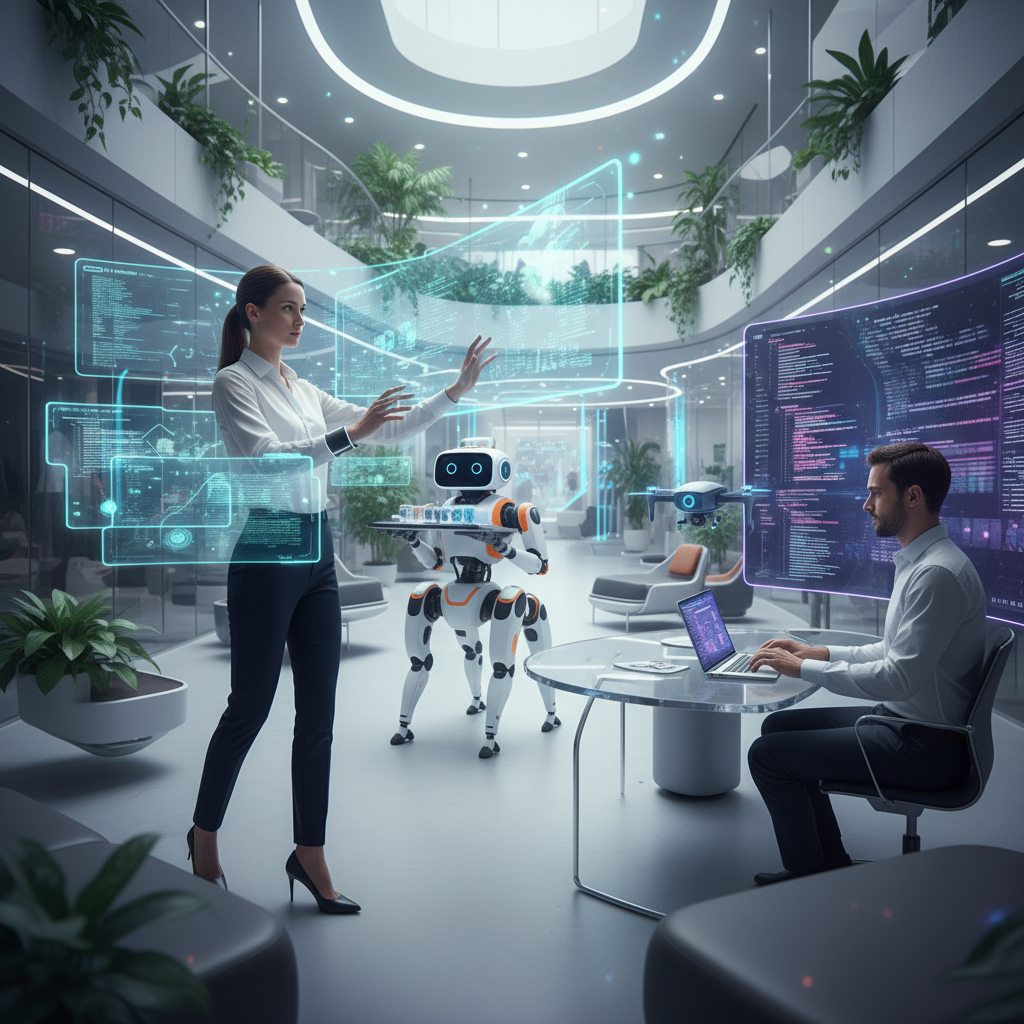
In the modern workplace, artificial intelligence and automation are transforming how we define expertise, value, and success. The long-standing debate between being a generalist or a specialist has taken on new urgency. As machines take over routine and repetitive work, professionals are now judged not only by what they know but also by how quickly they can learn, adapt, and integrate knowledge across fields. In this evolving landscape, both generalists and specialists must rethink their career strategies to stay relevant, resilient, and valuable.
The Shifting Landscape of Work in the Age of AI
Artificial intelligence and automation are reshaping industries faster than most professionals can adapt. Tasks once considered too complex for machines—data analysis, language translation, even content creation—are now automated with increasing efficiency. This shift challenges traditional ideas about expertise. Specialists, long valued for their deep technical knowledge, face the reality that some of their core skills can now be replicated by algorithms. Meanwhile, organizations increasingly seek professionals who can connect dots across domains, manage technological change, and think strategically about where automation fits into the bigger picture.
This transformation doesn’t mean specialists are obsolete. Rather, it marks the beginning of a new kind of professional environment—one that values the interplay between depth and adaptability. Professionals who can learn across boundaries, apply new tools quickly, and collaborate across disciplines are better positioned to lead. The workplace of the future belongs to those who can translate technical change into business opportunity.
Strengths and Weaknesses of the Specialist Mindset
Specialists have always been critical to progress. Their deep focus and mastery of a specific field drive innovation, precision, and expertise. From surgeons to data scientists, specialists deliver value through accuracy and depth. However, this same focus can become a limitation when technology evolves faster than human learning cycles. A specialist in one programming language or analytic method, for instance, might find their expertise outdated as new tools and AI-driven systems emerge.
The challenge for specialists in the age of automation lies in maintaining relevance. Depth alone no longer guarantees security. Instead, specialists must embrace augmentation—leveraging AI to enhance their expertise rather than replace it. The modern specialist thrives by integrating technology into their workflow, staying current with emerging tools, and continuously refining skills that machines can’t easily replicate, such as creative problem-solving, ethical reasoning, and human-centered design. In short, the future specialist is not replaced by AI but elevated by it.
The Rise of the Modern Generalist
While specialists dive deep, generalists connect the dots. The growing complexity of the modern workplace requires professionals who can bridge technology, strategy, and people. The generalist—especially the so-called “T-shaped” professional—combines breadth of knowledge across many domains with a deep skill in at least one. This profile fits perfectly in cross-functional teams, where understanding both the technical and business dimensions of a problem leads to faster, more innovative solutions.
AI and automation amplify the generalist’s advantage. As machines handle specialized tasks, the value shifts to those who can interpret, integrate, and guide these systems toward organizational goals. Generalists are naturally adaptive; they see patterns others miss, pivot quickly between functions, and communicate across silos. Their ability to learn continuously and synthesize insights makes them indispensable in environments where technology evolves rapidly. In an AI-driven economy, the best generalists are those who can learn like machines but think like humans.
Building a Future-Proof Career Strategy
Future-proofing a career in the age of AI means mastering both depth and adaptability. The ideal professional blends specialist expertise with the curiosity and learning agility of a generalist. This hybrid mindset demands continuous upskilling and a willingness to experiment with new tools, platforms, and methodologies. For example, a finance professional might learn to automate reports using Power Automate or build dashboards in Power BI, combining analytical expertise with digital fluency.
Equally important is cultivating human-centered skills—communication, collaboration, and systems thinking—that AI cannot easily replace. Professionals who pair technical competence with strategic empathy can bridge the gap between automation and human insight. Networking across disciplines, joining communities of practice, and embracing lifelong learning are practical ways to stay ahead. The goal is not to choose between being a generalist or a specialist but to evolve into a “versatilist”—someone capable of navigating multiple domains with confidence and purpose.
Conclusion
The age of AI and automation is not a zero-sum game between generalists and specialists. Both profiles hold immense value—but only when they evolve. Specialists must deepen their expertise while staying agile and tech-aware. Generalists must broaden their perspectives while developing enough depth to lead complex projects. The professionals who thrive will be those who understand the strengths of both worlds and blend them strategically. In a world where learning never stops, adaptability is the ultimate specialization.